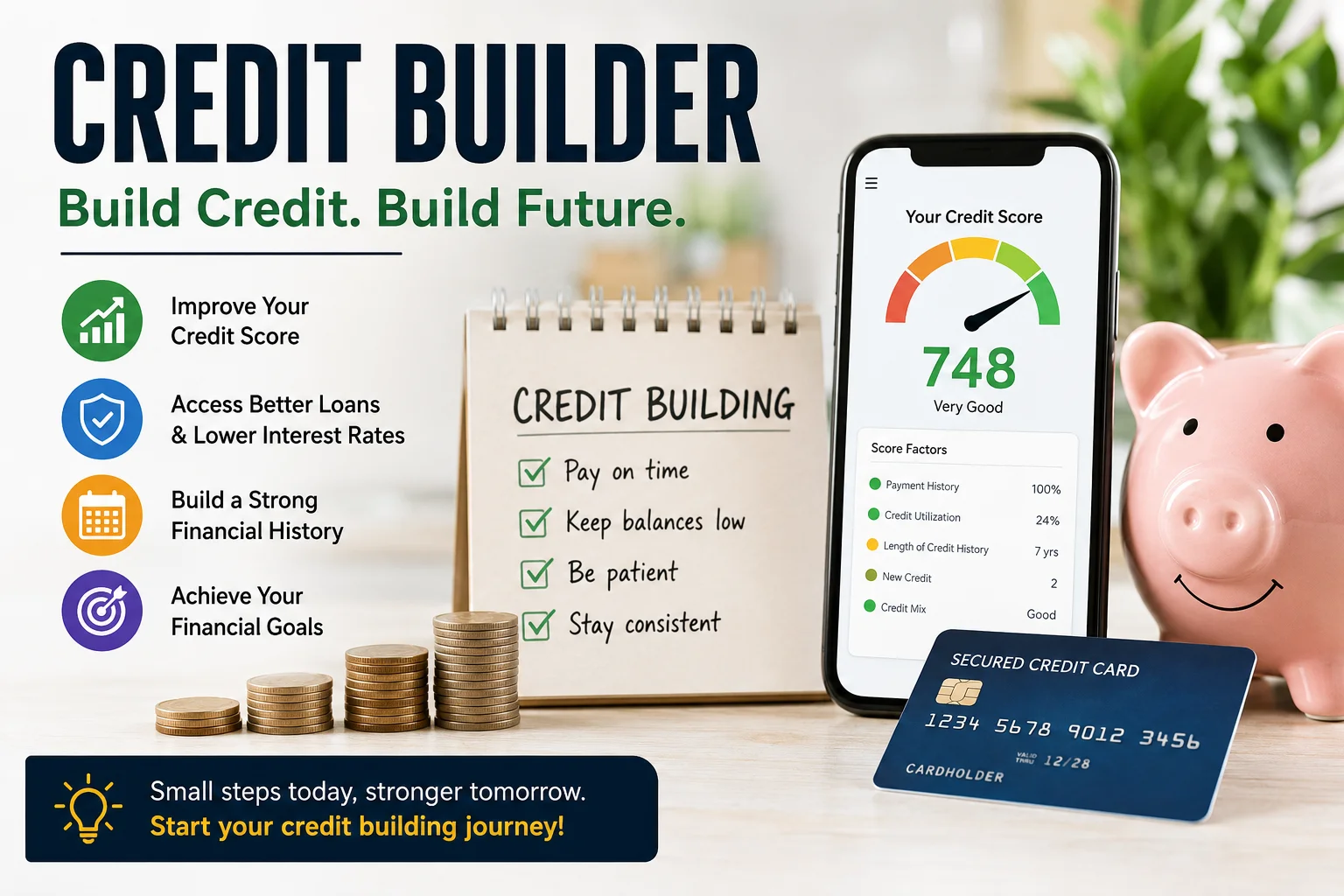
Credit Builder: A Complete Guide to Building Better Credit
Building credit can feel like a classic catch-22. You need a credit history to qualify for attractive financial products, but getting approved for those products can be difficult when you have little or no credit history. That is exactly where a credit builder can become useful. Whether you are starting from scratch, recovering from past credit problems, or simply trying to establish a stronger financial profile, credit-building tools can help you create a record of responsible borrowing and repayment. A credit builder is not a magic button that instantly raises your score, though. Think of it more like going to the gym: one workout will not transform your body, and one payment will not completely transform your credit profile. Consistent behavior over time is what creates meaningful results.
For many consumers, the most familiar credit-building options include credit builder loans, secured credit cards, and other accounts that report payment activity to major credit bureaus. The important part is not simply opening an account; it is understanding how that account works, what it costs, whether it reports to the credit bureaus, and whether you can comfortably make every payment on time. FICO explains that its scoring system considers payment history, amounts owed, length of credit history, new credit, and credit mix, with payment history carrying the largest share at 35%.
What Is a Credit Builder?
A credit builder is a financial product, strategy, or service designed to help someone establish or strengthen their credit history through responsible account activity. Unlike a conventional loan whose primary purpose is usually to give you money for a purchase, a credit-building product focuses heavily on creating positive information that can appear on your credit reports. Depending on the product, you may make regular payments toward a loan, use a secured credit card responsibly, or have another account reported to the credit bureaus. When those payments are reported and made as agreed, they can contribute to a positive credit history.
This distinction matters because your credit score is built from information contained in your credit reports. FICO describes its score as being based on several categories of credit information, including payment history, amounts owed, length of credit history, new credit, and credit mix. A credit builder therefore works best when it becomes part of a broader financial habit rather than being treated as a shortcut. Before opening one, look beyond advertising claims and ask practical questions: Does the provider report to the credit bureaus? What fees are charged? Is there an interest cost? What happens if you miss a payment? And, perhaps most importantly, can you comfortably afford the monthly obligation?
How Credit Building Works
The basic concept is straightforward: responsible account management creates a track record. Suppose you open a credit-building account that reports to the major credit bureaus. Each month, you make your payment according to the agreement. Over time, the account can contribute additional positive payment information to your credit file. The goal is to demonstrate that you can manage borrowed money or available credit without repeatedly missing payments or becoming excessively reliant on credit.
Payment history is especially important because FICO currently identifies it as 35% of a typical FICO Score calculation. That makes on-time payments one of the most valuable habits you can develop. At the same time, opening an account is not enough. A credit builder cannot erase every negative item instantly, and different scoring models can evaluate credit information differently. Your results will depend on your existing credit history, the type of account you use, how the account is reported, and what you do with your other financial accounts.
Why Building Credit Matters
Good credit can make borrowing less expensive and potentially easier to obtain. When you apply for a credit card, auto loan, mortgage, or another form of financing, lenders generally want evidence that you represent an acceptable level of repayment risk. FICO notes that its scores are used by 90% of top lenders and can influence decisions involving approval, credit limits, and interest rates. That does not mean your credit score is the only thing a lender considers. Income, employment, existing debts, loan type, and other information can also matter. Still, a stronger credit profile can give you a better starting point when you are looking for financing.
There is another reason credit building matters: financial opportunities often become easier when your credit history is established. Someone with a thin credit file may struggle to qualify for an attractive credit card or competitive loan even if they have enough income to make the payments. By contrast, someone with years of consistent payments and responsible credit usage may have more choices. The goal should not be to collect as many credit accounts as possible. Instead, think about building a clean, reliable history that tells lenders a simple story: you borrow responsibly, you manage your available credit carefully, and you pay your obligations when they are due.
How Credit Can Affect Everyday Financial Decisions
Credit can extend beyond traditional borrowing. Depending on where you live and the transaction involved, credit information may be considered in situations such as renting a home, obtaining certain services, or setting financing terms. FICO notes that credit scores can be relevant when consumers seek education financing, housing, medical financing, and other forms of credit.
That is why building credit early can be useful. Imagine your credit history as a professional résumé. A lender does not necessarily know you personally, so the credit report provides evidence of how you have handled financial commitments in the past. A short résumé does not automatically mean you are irresponsible; it simply gives the decision-maker less information. Credit-building accounts can gradually add positive history to that résumé. The trick is patience. Trying to force rapid growth by opening multiple accounts at once can backfire because new credit applications and recently opened accounts can influence your score.
How Credit Scores Are Calculated
One of the smartest things you can do before choosing a credit builder is understand what you are actually trying to improve. A credit score is not simply a reward for having a credit card or a loan. Scoring models analyze different pieces of information from your credit report and weigh them according to their own formulas.
For a typical FICO Score, the five major categories are payment history, amounts owed, length of credit history, new credit, and credit mix. FICO assigns general weights of 35%, 30%, 15%, 10%, and 10%, respectively, although the precise influence can vary depending on an individual’s overall credit profile. This means there is no single trick that guarantees a particular score increase. A person with no credit history may have a very different path from someone who has several late payments or high credit-card balances.
The Five Main FICO Score Factors
| FICO factor | General weight | What it means |
|---|---|---|
| Payment history | 35% | Whether accounts have been paid on time |
| Amounts owed | 30% | Debt levels and revolving credit utilization |
| Length of credit history | 15% | Age of accounts and overall history |
| New credit | 10% | Recent applications and newly opened accounts |
| Credit mix | 10% | Different types of credit accounts |
Payment history is the largest category. Consistently paying on time is therefore foundational to credit building. Amounts owed is also significant, particularly for revolving accounts such as credit cards. FICO explains that credit utilization—the percentage of available revolving credit being used—is an important part of this category.
Length of credit history rewards established accounts over time, although a long history is not required to have a good score. FICO considers factors such as the age of your oldest account, newest account, and average account age. New credit considers recent applications and accounts, while credit mix looks at the variety of account types in your credit report. You do not need every possible type of credit to have a strong score; opening accounts solely to create a particular mix can be unnecessary.
Credit Builder Loans Explained
A credit builder loan is an installment loan designed primarily to help establish a payment history. The structure can be different from a traditional personal loan. In many credit builder loan arrangements, the borrowed amount is held in a savings account or similar account while you make scheduled payments. Once the loan is paid according to its terms, the funds may become available to you, depending on the provider and agreement.
The appeal is easy to understand. Instead of borrowing money for a car, vacation, or emergency expense, the account is structured around building a repayment record. Each successful payment may be reported to one or more credit bureaus. Over time, those reports can contribute positive information to your credit history. However, the exact reporting practices, fees, interest charges, loan amount, and release of funds vary by provider, so you should read the agreement carefully before signing anything.
How a Credit Builder Loan Works
The process generally follows a simple pattern. You apply for an account, agree to the loan terms, make regular payments, and complete the repayment period. If the provider reports your activity to the credit bureaus and you pay as agreed, the account can add positive payment history to your credit profile. The account may also contribute to your credit mix because installment loans are a different type of credit from revolving accounts.
The biggest warning is equally simple: never take a credit-building loan that you cannot comfortably afford. The entire purpose is to demonstrate responsible repayment, so missing payments defeats the core objective and may create negative information. FICO states that the severity, frequency, and recency of late payments can influence their impact on scores. Before choosing a loan, calculate the total cost rather than focusing only on the advertised monthly payment. A small monthly amount can still become expensive when fees and interest are added together.
Secured Credit Cards as a Credit Builder Tool
A secured credit card can be another practical option for people who have limited or damaged credit. Unlike a traditional unsecured credit card, a secured card generally requires a refundable security deposit that serves as collateral for the credit line. You then use the card for purchases and make payments according to the card agreement.
The deposit does not automatically mean the card is a bad deal. In fact, secured cards can provide a bridge between having little credit history and eventually qualifying for conventional unsecured credit. The important detail is whether the issuer reports your account activity to the relevant credit bureaus. If it does, responsible use can help create a history of revolving credit. You should also compare annual fees, interest rates, minimum deposits, credit limits, upgrade policies, and other terms before applying.
A secured card should be treated like a financial tool, not free money. One useful approach is to make a small number of predictable purchases and pay the balance responsibly. Because credit utilization can affect FICO Scores, keeping revolving balances under control is important. FICO specifically identifies utilization as a meaningful component of the amounts-owed category. The goal is to build a history without turning a small credit line into a growing pile of expensive debt.
Other Ways to Build Credit
A credit builder loan or secured credit card is not your only option. Depending on your situation, other strategies can help establish a credit history. Some people may qualify to become an authorized user on another person’s credit card. If the issuer reports authorized-user activity to the credit bureaus, the account may contribute information to the authorized user’s credit profile. However, the details can vary, so it is important to understand the issuer’s reporting policy and the primary cardholder’s account history.
You can also build credit through conventional credit products when you qualify for them. The key is choosing accounts that fit your budget and using them responsibly. There is little benefit in opening several accounts merely because they are available. FICO explains that opening multiple new credit accounts over a short period can indicate greater risk, especially for consumers with limited credit histories.
Become an Authorized User
Being an authorized user can sometimes help someone with a thin credit file gain exposure to an established account. But this strategy requires trust. If the primary account holder regularly misses payments or carries very high balances, the relationship may not produce the outcome you want. Before becoming an authorized user, confirm how the issuer reports authorized-user accounts and understand what responsibilities, if any, you will have.
There is also a simple lesson here: you do not need to manufacture complexity to build credit. A small number of well-managed accounts can be more useful than a wallet full of cards. Your objective is to establish consistent positive information while avoiding unnecessary fees, debt, and applications.
How Long Does It Take to Build Credit?
There is no universal timeline for building credit because everyone starts from a different position. Someone with no credit history is solving a different problem from someone repairing a score after missed payments. Your results can also depend on the scoring model, the accounts being reported, and how frequently lenders update your credit reports.
FICO says that, to receive a valid FICO Score, a credit report generally needs at least one account that has been open for six months or longer and at least one account that has been reported to the credit bureau within the past six months. That does not mean everyone will see a dramatic score change after six months. Building a strong credit profile is a long-term process.
Think about it like planting a tree. The first stage is mostly invisible: you establish the roots. You make payments, keep balances manageable, avoid unnecessary applications, and allow your accounts to age. With time, those individual actions form a larger pattern that lenders and scoring models can evaluate.
How to Choose the Right Credit Builder
Choosing the right credit builder requires more than searching for the product with the highest advertised score improvement. Start by asking what problem you are trying to solve. If you have no credit history, you may need an account that reports consistent payments. If you already have several accounts but high card balances, reducing utilization may be more relevant than opening another account. If you have recent missed payments, getting existing accounts current and maintaining on-time payments may be more important than adding new credit.
Next, examine the actual terms. Look for reporting information, annual or monthly fees, interest rates, deposit requirements, loan terms, cancellation policies, and penalties. Calculate the total cost over the full life of the account. A product that costs significantly more than another option may not make sense simply because it advertises itself as a credit-building solution.
Finally, consider your budget. A credit builder should fit into your normal monthly expenses without forcing you to borrow money to make the payment. If the product creates financial stress, it can become counterproductive. Remember, the strongest credit-building strategy is boring in the best possible way: borrow carefully, pay on time, keep debt manageable, and give your history time to mature.
Common Credit Building Mistakes to Avoid
One of the biggest mistakes is assuming that carrying a balance is necessary to build credit. You do not need to pay interest simply to demonstrate responsible credit use. Another mistake is using a large percentage of your available credit because the limit seems generous. FICO identifies credit utilization as an important part of the amounts-owed category, and high utilization can signal greater risk.
Another common error is applying for too many accounts at once. Every application does not necessarily have the same effect, and scoring models can treat inquiries differently depending on the circumstances, but repeated new applications can create problems. FICO notes that new credit is one of the five major scoring categories and that several new accounts opened within a short period can represent increased risk.
Finally, never ignore your credit reports. If information is inaccurate, you want to discover it rather than allowing an error to remain unnoticed. Building credit is not just about adding positive accounts; it is also about understanding what is already being reported in your name. A strong financial routine includes checking your reports, monitoring account activity, making payments on time, and questioning information that appears incorrect.
Conclusion
A credit builder can be a useful starting point for anyone who wants to establish or strengthen a credit history, but the product itself is only one piece of the puzzle. Credit builder loans, secured credit cards, authorized-user accounts, and other responsible credit strategies can help create the payment history that scoring models evaluate. The most important habit is still remarkably simple: pay your obligations on time. FICO identifies payment history as the largest component of its typical scoring model, while amounts owed and credit utilization are also major considerations.
The best credit-building strategy is therefore not necessarily the one promising the fastest score increase. It is the one you can maintain month after month without taking on unnecessary costs or debt. Start with your current situation, choose a product that fits your budget, verify that the account reports as expected, and give your credit history time to develop. When you treat credit as a long-term financial relationship rather than a quick score-hacking exercise, you give yourself a much better chance of building a profile that can support future financial goals.
FAQs About Credit Builders
1. What is a credit builder?
A credit builder is a financial product or strategy designed to help establish or improve a person’s credit history through responsible account activity. Common examples include credit builder loans and secured credit cards. The exact effect depends on whether the account reports to credit bureaus and how the account is managed.
2. Does a credit builder guarantee a higher credit score?
No. No legitimate credit-building product can guarantee a specific score increase. Your score depends on the information in your credit reports, including payment history, amounts owed, account age, new credit, and credit mix.
3. Is a credit builder loan worth it?
It can be worthwhile for someone who needs to establish installment-loan payment history and can comfortably afford the payments. However, you should compare the total cost, fees, interest, reporting practices, and loan terms before applying. If the account is too expensive or difficult to manage, it may not be the right option.
4. How quickly can a credit builder improve my credit?
There is no guaranteed timeline. FICO indicates that a valid FICO Score generally requires at least one account that has been open for six months or longer and has had recent reporting activity. Actual score changes vary based on your entire credit profile and the information being reported.
5. What is the most important habit for building credit?
Consistently paying your bills on time is one of the most important habits you can develop. Payment history represents 35% of a typical FICO Score calculation, making it the largest of the five main categories. Keeping revolving balances manageable and avoiding unnecessary new accounts can also support responsible credit management.












Post Comment