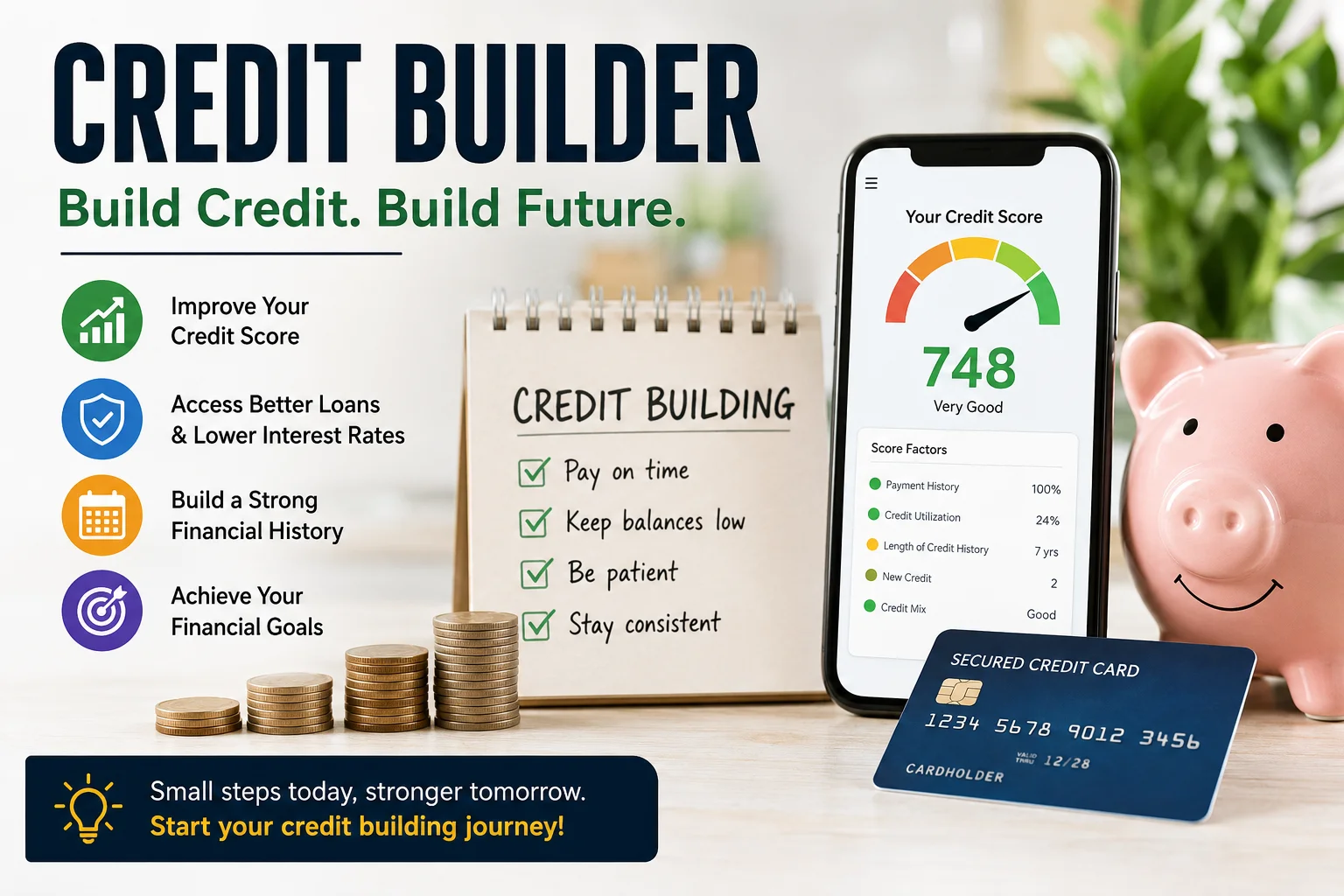
Credit Builder: Ultimate 7-Step Guide to Building Stronger Credit
Introduction: Why Building Credit Matters
A strong credit history can make many parts of financial life easier. Whether you’re trying to rent an apartment, qualify for a credit card, finance a car, or eventually purchase a home, your credit history can influence the options available to you and the price you pay for borrowing.
But building credit isn’t always straightforward. If you’ve never borrowed money before, you may have little or no credit history. And if you’ve made financial mistakes in the past, rebuilding your credit can take patience and consistency.
That’s where a Credit Builder product may become useful.
A credit builder loan is designed differently from a traditional personal loan. Instead of receiving the borrowed money immediately and then making payments, you generally make payments first while the loan funds are held in a savings account. Once the loan is paid off, you receive access to the money, depending on the lender’s terms.
The Consumer Financial Protection Bureau (CFPB) explains that credit builder loans can help consumers establish credit while also giving them an opportunity to build savings. Terms vary, but these loans are commonly structured over several months to two years.
That sounds appealing, but there’s an important catch: a credit builder loan isn’t a magic button for raising your score. You still have to make payments on time, understand the fees, and make sure the monthly payment fits comfortably into your budget.
In this guide, we’ll break down how credit builder loans work, who may benefit from them, what to watch out for, and how they compare with other credit-building strategies.
What Is a Credit Builder?
A credit builder loan is a financial product designed primarily to help establish or strengthen a person’s credit history.
With a conventional loan, you typically receive money upfront and repay the lender over time. A credit builder loan reverses that basic sequence.
The lender generally places the loan amount into a locked savings account or similar account. You then make scheduled payments. As you make those payments, the lender may report your payment activity to the major credit reporting companies.
After you’ve completed the loan term, the funds are generally released to you, subject to the agreement’s terms.
For example, imagine a lender offers a $600 credit builder loan for 12 months. Instead of giving you $600 to spend immediately, the lender places the funds into a secured account. You then make monthly payments plus applicable interest and fees.
At the end of the term, you receive the accumulated funds according to the lender’s release policy.
The CFPB’s research describes credit builder loans as products designed to establish a credit record or improve repayment history while potentially helping consumers save money.
Why Is This Structure Different?
The structure reduces some of the lender’s risk because the loan proceeds aren’t immediately handed over to the borrower for unrestricted spending.
For the borrower, the primary goal isn’t usually access to cash. Instead, the goal is to create a record of responsible installment-loan payments.
That distinction is important.
If you urgently need money for rent, medical bills, groceries, or an unexpected repair, a credit builder loan may not be the right tool. It isn’t primarily designed for immediate borrowing needs.
What Does “Credit Builder” Actually Mean?
The phrase can refer to several different financial products and services, not only loans.
For example, credit-building options can include:
- Credit builder loans
- Secured credit cards
- Certain credit cards designed for people with limited credit
- Rent-reporting services
- Financial counseling programs
- Responsible use of traditional credit accounts
The important question isn’t simply whether a product has the words “credit builder” in its name. You should check whether the provider reports payment activity to the credit reporting companies and understand exactly what you’re paying for.
How Does a Credit Builder Loan Work?
The process is usually simple, although the exact terms vary by lender.
Step 1: Choose a Lender
You might find credit builder loans through credit unions, community banks, nonprofit organizations, or financial technology companies.
Start by comparing several providers rather than accepting the first offer you see.
Look at:
- Loan amount
- Loan term
- Annual percentage rate
- Monthly payment
- Application fees
- Account fees
- Early payoff rules
- Late-payment penalties
- Credit bureau reporting
- Savings-account terms
Step 2: Apply
The lender may review your identity, income, banking information, and other eligibility factors.
Some credit builder products are designed for people with limited or poor credit, but approval isn’t guaranteed.
Also, check whether the application involves a hard credit inquiry. A hard inquiry can affect your credit score, while a soft inquiry generally doesn’t.
Step 3: The Funds Are Placed in an Account
If you’re approved, the lender typically places the loan amount into a locked savings account or similar account.
You don’t normally receive the money as freely spendable cash at the beginning.
Step 4: Make Monthly Payments
You make scheduled payments according to the loan agreement.
For example:
| Example Term | Amount |
|---|---|
| Loan amount | $600 |
| Term | 12 months |
| Principal portion | About $50/month |
| Interest/fees | Depends on lender |
| Initial cash access | Usually none |
| Final funds | Released under lender terms |
This is only an illustration. Actual rates, fees, and payment schedules vary considerably between providers.
Step 5: Payments May Be Reported
This is one of the most important parts of the process.
If the lender reports your account to the major credit reporting companies, your payment history can become part of your credit profile.
That’s why on-time payments matter so much.
Step 6: Complete the Loan
After making the required payments, the lender generally releases the savings or loan proceeds according to the agreement.
At that point, you may have both a completed installment account and money you’ve accumulated through the program.
Who Should Consider a Credit Builder?
A credit builder loan may be particularly useful for people who have limited or no established credit history.
It can also be considered by someone who wants another installment account on their credit profile and can comfortably handle the payments.
However, not everyone needs one.
It May Be Worth Considering If:
- You have little or no credit history.
- You want to establish an installment payment record.
- You can afford the monthly payment.
- You want a structured savings commitment.
- The lender reports payments to major credit reporting companies.
- You understand the total cost.
It May Not Be Ideal If:
- You already have several monthly debt payments.
- Your budget is extremely tight.
- You need immediate access to borrowed cash.
- The lender charges high fees.
- You aren’t confident you can make every payment on time.
Research from the CFPB found that people without existing debt tended to benefit more from the credit builder loan studied than participants who already had debt. The findings suggest that adding another payment obligation can be challenging for consumers who are already financially stretched.
In other words, don’t take on a credit-building product simply because you want a higher score. The monthly payment needs to fit your real-life budget.
7 Key Benefits of a Credit Builder
A credit builder can provide several potential advantages when used responsibly.
1. Establishing Credit History
If you have little or no credit history, a reported installment account can give lenders additional information about your repayment behavior.
Credit reports contain information about credit accounts, balances, payment history, inquiries, and other financial information.
2. Creating a Positive Payment Record
Payment history is a major part of how many credit scoring models evaluate consumers.
Making every payment on time can help demonstrate responsible borrowing behavior.
3. Building Savings
Unlike many conventional loans, credit builder loans can combine credit-building with a savings component.
Once the loan is completed, the money may become available to you.
4. Smaller Loan Amounts
Credit builder loans are often relatively small compared with traditional personal loans.
That can make the monthly obligation easier to manage, although affordability still depends on your individual finances.
5. A Structured Financial Routine
Some people benefit from having a fixed monthly payment.
Instead of simply telling yourself to save money, you have a defined schedule that encourages consistent financial behavior.
6. Potential Access for People With Limited Credit
Some credit builder products are specifically designed for consumers who have limited credit histories.
However, lenders still set their own eligibility requirements.
7. Financial Confidence
Successfully completing a small installment account can help you understand how borrowing, repayment, credit reporting, and budgeting work.
That’s a useful skill long after the loan is finished.
Potential Drawbacks and Risks
No financial product is perfect.
A credit builder loan can help some people, but it can also create problems if you don’t understand the terms.
Interest and Fees
You may pay interest, administrative charges, membership fees, or other costs.
Before signing up, calculate the total amount you’ll pay compared with the amount you’ll eventually receive.
Late Payments Can Hurt
The same reporting mechanism that can help you establish positive credit can also work against you if you miss payments.
A credit builder loan isn’t “safe” from the consequences of late payments simply because it’s designed for credit building.
The CFPB notes that late payments on credit builder loans can harm credit scores.
You May Not Get Cash Immediately
This is probably the biggest misunderstanding.
If you’re expecting a traditional loan where $500 lands in your checking account today, a credit builder loan may disappoint you.
The money is generally held until you satisfy the lender’s conditions.
It May Add Another Monthly Obligation
If you already have credit cards, auto loans, student loans, rent, utilities, and other bills, another payment can put pressure on your budget.
Don’t let the desire to improve your score push you into an unaffordable payment.
Credit Builder vs. Secured Credit Card
A secured credit card is another common way to build credit.
The main difference is how you access and use the account.
With a secured card, you typically provide a refundable security deposit and receive a credit limit based on the account’s terms. You can then use the card for purchases and make payments each month.
With a credit builder loan, the money is generally locked away while you make installment payments.
| Feature | Credit Builder Loan | Secured Credit Card |
|---|---|---|
| Main purpose | Build installment history | Build revolving credit history |
| Cash available immediately | Usually no | Purchases can be made |
| Security deposit | Usually no opening deposit | Usually required |
| Payment type | Fixed installments | Credit card bill |
| Savings component | Often | Deposit is collateral |
| Spending temptation | Lower | Higher |
| Credit utilization | Not applicable in same way | Important |
The CFPB lists both credit builder loans and secured credit cards among products that can help people start or rebuild credit.
If you’re disciplined with spending, a secured card may offer flexibility. If you prefer a fixed payment and savings structure, a credit builder loan may be more attractive.
Credit Builder vs. Personal Loan
A credit builder loan and a personal installment loan may look similar because both involve scheduled payments.
But their purposes are different.
A traditional personal loan generally provides funds upfront. You then repay the lender over time.
A credit builder loan generally focuses on establishing credit and building savings rather than providing immediate spending money.
| Factor | Credit Builder | Personal Loan |
|---|---|---|
| Cash upfront | Usually no | Usually yes |
| Primary purpose | Credit building | Borrowing money |
| Typical structure | Savings-backed | Direct disbursement |
| Payment schedule | Fixed | Usually fixed |
| Credit reporting | Depends on lender | Depends on lender |
| Best use | Establishing repayment history | Funding an approved expense |
If you need $5,000 to pay for a major expense, a credit builder loan probably isn’t designed for that situation.
If your goal is to establish a credit history and you don’t need immediate cash, the credit builder structure may make more sense.
How to Choose the Right Credit Builder
Choosing the first product you find isn’t always the smartest move.
Take a few minutes to compare the details.
1. Confirm Credit Reporting
Ask the provider exactly which credit reporting companies receive your payment information.
Don’t assume that every product advertised as a credit builder reports payments everywhere.
2. Compare the Total Cost
Look beyond the monthly payment.
Calculate:
Total cost = principal + interest + mandatory fees
A low monthly payment doesn’t necessarily mean a cheap product.
3. Check the Loan Term
A six-month loan and a 24-month loan can produce very different experiences.
A longer term may reduce the monthly payment but potentially increase the total interest paid.
4. Understand Early Payoff Rules
Ask whether paying the loan early changes your savings release date, interest cost, or credit-building benefits.
5. Review Late Fees
Find out exactly what happens if you miss a payment.
6. Check Account Access
Understand where the money is held and when you can access it.
7. Read Reviews Carefully
Online reviews can provide useful clues, but don’t rely on them alone.
Look at the actual loan agreement and disclosures before making a decision.
How to Use a Credit Builder Successfully
The best way to use a credit builder is to treat it as a financial habit, not a quick credit-score hack.
Create Automatic Payments
If the lender supports automatic payments, consider scheduling them around your regular income cycle.
Automation can reduce the risk of forgetting a due date.
Keep an Emergency Cushion
Don’t spend every dollar in your bank account just to make a payment.
A small emergency fund can help you handle unexpected expenses without missing your loan payment.
Monitor Your Credit Reports
Check your credit reports periodically to make sure your account is being reported accurately.
A credit report isn’t just a score. It contains details about your accounts and payment history.
Avoid Opening Too Many Accounts
More credit isn’t automatically better.
Opening several accounts in a short period can make your finances harder to manage and may result in additional credit inquiries.
Continue Good Habits After the Loan
Completing a credit builder loan isn’t the finish line.
Continue paying other bills on time, managing balances carefully, and avoiding unnecessary debt.
Common Credit Builder Mistakes to Avoid
Even a well-designed product can cause problems when used incorrectly.
Mistake 1: Choosing Based Only on Monthly Payment
A $30 monthly payment may sound affordable, but you need to consider the total cost and loan duration.
Mistake 2: Ignoring Fees
Read the fee schedule before applying.
Mistake 3: Assuming Every Lender Reports Payments
Always verify reporting practices.
Mistake 4: Missing Payments
A late payment can undermine the very goal you’re trying to accomplish.
Mistake 5: Taking One While Already Overextended
If your current debt payments are difficult to manage, adding another account may not be the answer.
Mistake 6: Expecting an Overnight Score Increase
Credit building takes time.
There isn’t a guaranteed number of points you’ll gain from completing a credit builder loan.
Mistake 7: Ignoring Your Existing Credit Problems
If your credit report contains inaccurate information, you may need to address those issues directly rather than simply opening a new account.
How Long Does It Take to Build Credit?
There’s no universal timeline.
Your credit profile depends on several factors, including:
- Existing accounts
- Payment history
- Credit utilization
- Account age
- Credit mix
- New applications
- Negative information
A credit builder loan can add a new account and payment history, but your overall score is based on your broader credit profile.
The CFPB’s research found meaningful effects in some groups, but it also showed that results varied depending on consumers’ existing debt situations.
So, think in terms of months and consistent habits rather than days.
If you want to learn more about responsible credit-building strategies, the Consumer Financial Protection Bureau’s credit-building guidance is a useful starting point.
How a Credit Builder Can Affect Your Credit Score
A credit builder loan is generally reported as an installment account when the lender reports it.
Your payment history can then become part of your credit file.
This is why making payments on time is so important.
However, credit scores don’t depend on one factor alone. Your existing debts, account history, utilization, inquiries, and other information can also influence your score.
For example, opening a new account doesn’t automatically guarantee a score increase.
The CFPB’s evaluation found that credit builder loans were more effective for participants who entered the study without existing debt, while participants with existing debt saw less benefit and, in some cases, negative effects.
The lesson is simple: the right financial product depends on your overall financial situation.
Alternatives to a Credit Builder Loan
A credit builder isn’t your only option.
Secured Credit Card
A secured card may be useful if you want to establish revolving credit while controlling your spending limit.
Traditional Credit Card
If you qualify for a beginner-friendly card, responsible use can help build credit.
Pay the bill on time and avoid carrying balances you can’t afford.
Become an Authorized User
In some circumstances, being added as an authorized user to another person’s well-managed credit card may help you establish credit history. However, policies and scoring effects vary, so understand how the issuer reports authorized users.
Rent Reporting
Some services report eligible rental payments to credit reporting companies. Availability, costs, and which bureaus receive the information vary.
Student Credit Products
Students may have access to financial products designed specifically for people starting their credit journey.
Credit Counseling
If you’re dealing with debt rather than simply a lack of credit history, professional credit counseling may be more appropriate.
The CFPB explains that credit counselors can help with budgeting, debt management, credit reports, and financial education.
Frequently Asked Questions About Credit Builder Loans
1. What is a credit builder loan?
A credit builder loan is generally designed to help consumers establish or strengthen credit history while potentially building savings. Instead of receiving the loan money upfront, the funds are typically held in a secured account while you make scheduled payments.
2. Does a credit builder loan guarantee a higher credit score?
No. There is no universal guarantee that your score will increase. Results depend on your overall credit profile, payment history, existing debt, and the lender’s reporting practices.
3. Can someone with no credit get a credit builder loan?
Some credit builder products are specifically designed for people with limited or no credit history. However, eligibility requirements vary between providers.
4. Do credit builder loans really work?
They can help some consumers establish a credit record or develop positive payment history. CFPB research found stronger results among participants who had no existing debt, while results were less favorable for some participants who already carried debt.
5. How much does a credit builder loan cost?
The cost depends on the lender, interest rate, loan amount, term, and fees. Always calculate the total amount you’ll pay before signing an agreement.
6. Can a credit builder loan hurt my credit?
Yes, if payments are reported and you make late payments, the negative payment information can hurt your credit. A credit builder loan should therefore be treated like any other serious financial obligation.
7. Do credit builder loans give you money immediately?
Usually, no. The defining structure is that the loan funds are held in an account while you make payments. Access to the funds typically comes later according to the loan agreement.
8. Is a credit builder loan better than a secured credit card?
Neither is automatically better. A credit builder loan focuses on installment credit and may include a savings component, while a secured credit card can help establish revolving credit. Your budget and goals should determine which is more appropriate.
9. How long should I keep a credit builder loan?
The appropriate term depends on your financial situation and the specific product. Common terms can range from several months to two years. Choose a term you can comfortably manage rather than focusing only on how quickly you want to finish.
10. Should I get a credit builder loan if I already have debt?
Be cautious. If your current debt payments are difficult to manage, adding another monthly obligation may create more problems. CFPB research suggests people without existing debt may benefit more from credit builder loans than people already carrying debt.
Final Thoughts: Is a Credit Builder Right for You?
A Credit Builder loan can be a useful financial tool for someone who wants to establish credit, strengthen repayment history, and potentially build savings at the same time.
But it isn’t a shortcut.
The strongest results come from combining the product with responsible financial habits: paying bills on time, keeping debt manageable, monitoring credit reports, and avoiding unnecessary borrowing.
Before applying, compare lenders carefully. Confirm that payments are reported, calculate the total cost, understand when you’ll receive the money, and make sure the monthly payment fits your budget.
If you don’t need immediate cash and want a structured way to develop an installment credit history, a credit builder loan may be worth considering. On the other hand, if you’re already struggling with debt, another loan may not solve the underlying problem.
At the end of the day, building strong credit is less about finding a magic product and more about demonstrating consistent financial responsibility over time. Start small, understand the terms, and make every payment count.












Post Comment