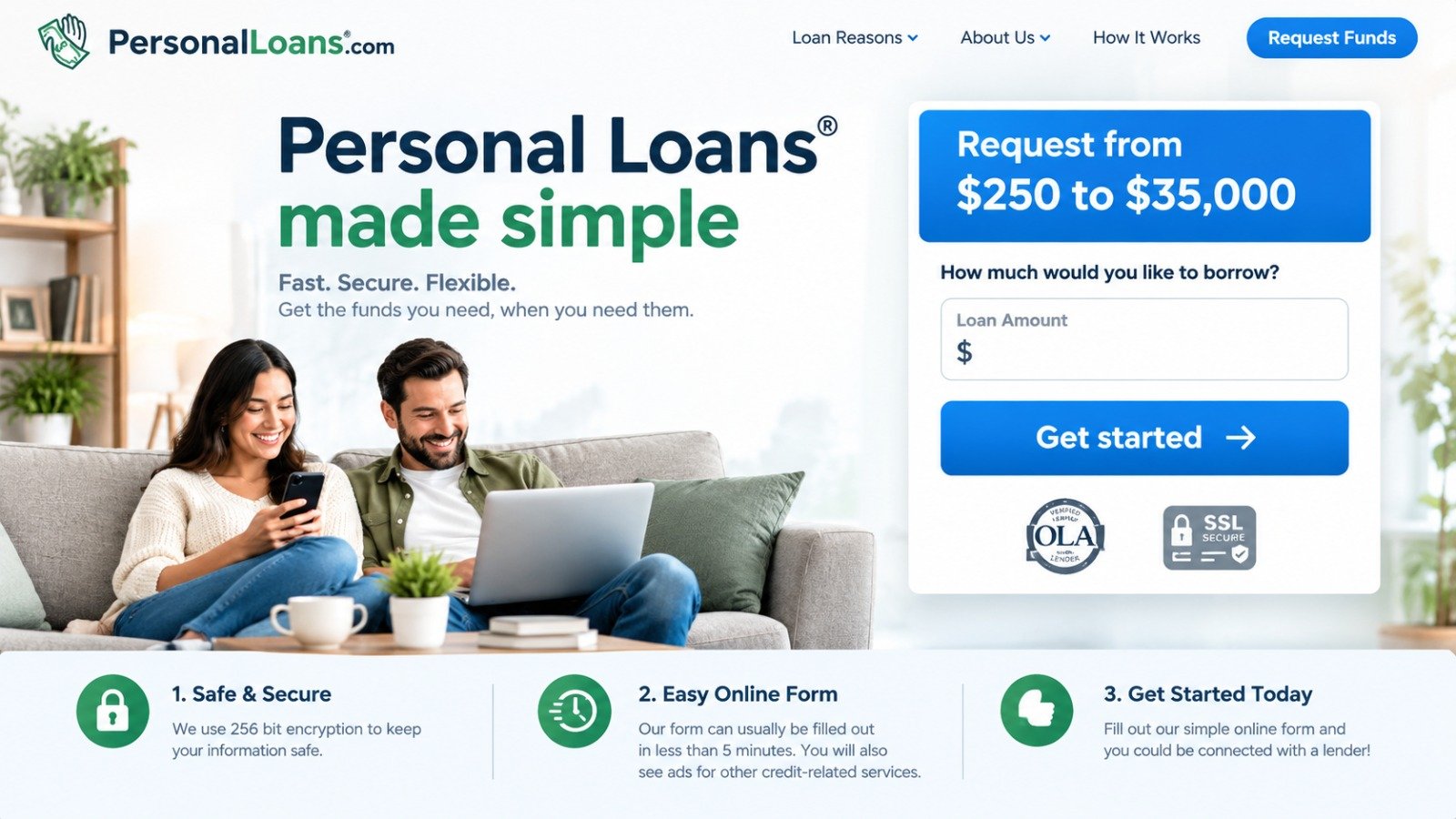
Personal Loans Made Simple: 7 Powerful Ways to Borrow Smarter in 2026
Personal loans have become one of the most flexible tools people reach for when life throws an unexpected bill their way, or when a big goal — like consolidating debt or renovating a kitchen — needs a financial boost. If you’ve ever wondered how personal loans work, whether they’re right for you, or how to avoid common pitfalls, you’re in the right place. This guide breaks everything down in plain language, so you can borrow with confidence rather than confusion.
What Is a Personal Loan, Anyway?
A personal loan is a lump sum of money you borrow from a bank, credit union, or online lender, which you then pay back in fixed monthly installments over a set period — usually two to seven years. Unlike a mortgage or an auto loan, a personal loan isn’t tied to a specific purchase. You can use it for almost anything: paying off high-interest credit card debt, covering a medical bill, funding a wedding, or handling a home repair that just can’t wait.
What makes personal loans appealing is their simplicity. You borrow, you repay in predictable chunks, and once it’s paid off, you’re done. There’s no ongoing credit line to manage, which honestly makes budgeting a whole lot easier for many folks.
Secured vs. Unsecured Personal Loans
Personal loans generally come in two flavors:
- Unsecured personal loans don’t require collateral. The lender approves you based on your creditworthiness, income, and financial history. Most personal loans fall into this category.
- Secured personal loans require you to put up an asset — like a savings account or a vehicle — as collateral. Because the lender has less risk, secured loans often come with lower interest rates, but you risk losing the collateral if you default.
Choosing between the two really comes down to your credit profile and comfort level with risk. If your credit isn’t stellar, a secured loan might get you a better rate, but it’s worth weighing the trade-offs carefully.
Common Uses for Personal Loans
People use personal loans for a surprisingly wide range of purposes, including:
- Consolidating high-interest credit card debt
- Covering medical or dental expenses
- Financing home improvements
- Paying for a wedding or major life event
- Handling emergency expenses like car repairs
- Funding a move or relocation
- Bridging a temporary cash-flow gap
Why Personal Loans Are Having a Moment
Rising Popularity Among Borrowers
Personal loans aren’t a new concept, but they’ve surged in popularity over the last decade. Rising credit card interest rates have pushed many borrowers to look for alternatives with more predictable payments. Instead of watching a credit card balance balloon under compounding interest, a personal loan offers a fixed rate and a clear payoff date — and honestly, that peace of mind counts for a lot.
How Lenders Are Adapting
Online lenders and fintech companies have also made the process faster and more accessible. Where getting a loan once meant an in-person appointment and a stack of paperwork, today you can often apply, get approved, and receive funds within a day or two — sometimes even hours. This shift toward digital-first lending has made personal loans a go-to option for people who need funds quickly without jumping through hoops.
How Personal Loans Actually Work
The Application Process
Applying for a personal loan typically involves a few straightforward steps:
- Check your credit score to get a sense of what rates you might qualify for.
- Shop around and compare offers from multiple lenders.
- Submit an application with details about your income, employment, and financial obligations.
- Undergo a credit check, which may be a soft pull (no impact on your score) during pre-qualification, followed by a hard pull once you formally apply.
- Review your loan offer, including the interest rate, term, and any fees.
- Accept and receive funds, often deposited directly into your bank account.
Most lenders will give you a decision within minutes to a few days, and funding can happen almost immediately after approval.
Interest Rates and APR Explained
The interest rate is the cost of borrowing, expressed as a percentage of your loan amount. The Annual Percentage Rate (APR), though, tells the fuller story — it includes the interest rate plus any additional fees, giving you a more accurate picture of what the loan will really cost you over a year.
When comparing personal loans, always look at the APR rather than just the headline interest rate. A loan with a slightly higher interest rate but no origination fee might actually cost less than one with a lower rate and a hefty upfront charge.
Fixed vs. Variable Rates
Most personal loans come with a fixed rate, meaning your interest rate — and therefore your monthly payment — stays the same for the life of the loan. This predictability is one of the biggest draws of personal loans. Some lenders offer variable rate loans, where the rate can fluctuate based on market conditions. Variable rates might start lower, but they carry more risk if rates climb during your repayment period.
7 Powerful Ways to Borrow Smarter
Getting a personal loan is one thing; getting a good personal loan is another. Here are seven practical strategies to make sure you’re borrowing on the best possible terms.
1. Know Your Credit Score First
Your credit score is the single biggest factor influencing your interest rate. Before you apply anywhere, pull your credit report and check your score. If it’s lower than you’d like, consider spending a few months paying down existing balances or correcting any errors on your report before applying. Even a modest score improvement can translate into meaningfully lower interest rates.
2. Compare Multiple Lenders
Don’t settle for the first offer you see. Rates and terms can vary significantly between banks, credit unions, and online lenders. Many lenders let you pre-qualify with a soft credit check, so you can compare estimated rates without hurting your score. Take advantage of this — it costs you nothing and could save you hundreds or thousands of dollars over the life of the loan.
3. Read the Fine Print on Fees
Origination fees, prepayment penalties, and late payment charges can all add to the true cost of a loan. Some lenders advertise attractively low rates but tack on fees that eat into your savings. Always ask for the full fee schedule before signing anything.
4. Choose the Right Loan Term
A shorter loan term usually means a higher monthly payment but less interest paid overall. A longer term lowers your monthly payment but increases the total interest you’ll pay. Think about what fits your budget without stretching your finances thin, and resist the temptation to choose the longest term just because it looks more affordable month-to-month.
5. Borrow Only What You Need
It can be tempting to borrow a bit extra “just in case,” but every additional dollar borrowed is a dollar you’ll pay interest on. Calculate exactly what you need for your specific purpose and stick to that amount.
6. Set Up Autopay
Many lenders offer a small interest rate discount — often around 0.25% — for setting up automatic payments. It’s a simple way to save money while also ensuring you never miss a due date, which protects your credit score.
7. Have a Repayment Plan Before You Sign
Before you accept any loan offer, map out how the new monthly payment fits into your budget. Consider what would happen if your income dropped or an unexpected expense popped up. Having a cushion — even a small emergency fund — can prevent a manageable loan from becoming a financial strain.
Pros and Cons of Personal Loans
| Pros | Cons |
|---|---|
| Fixed monthly payments make budgeting easier | Interest rates can be high for borrowers with poor credit |
| Funds can be used for almost any purpose | Origination fees may apply |
| No collateral required for unsecured loans | Missing payments can seriously damage your credit |
| Fast approval and funding timelines | Taking on new debt without a repayment plan can backfire |
| Can consolidate multiple debts into one payment | Not ideal for very small or very short-term borrowing needs |
Advantages
The predictability of a personal loan is arguably its biggest strength. You know exactly how much you owe each month and exactly when you’ll be debt-free. That kind of clarity is hard to beat, especially compared to revolving credit like credit cards, where minimum payments can drag repayment out indefinitely.
Drawbacks
On the flip side, personal loans aren’t free money — they still cost you in interest, and if your credit isn’t in great shape, that cost can climb quickly. It’s worth being honest with yourself about whether a loan is solving a temporary problem or simply delaying a bigger one.
Personal Loans vs. Other Borrowing Options
Personal Loans vs. Credit Cards
Credit cards offer flexibility and revolving credit, but interest rates tend to be considerably higher than personal loan rates, especially for carried balances. If you’re consolidating credit card debt, a personal loan with a lower fixed rate can help you pay off the balance faster and pay less in interest overall.
Personal Loans vs. Home Equity Loans
Home equity loans typically offer lower interest rates because they’re secured by your house. However, they also put your home at risk if you can’t keep up with payments, and the application process tends to be slower. Personal loans, by contrast, are quicker to obtain and don’t put your home on the line — though you’ll likely pay a somewhat higher rate in exchange for that lower risk.
Who Should (and Shouldn’t) Consider a Personal Loan
Personal loans tend to make the most sense for people who have a clear purpose for the funds, a stable income to support repayment, and a credit profile strong enough to secure a reasonable rate. They’re particularly useful for debt consolidation, since replacing several high-interest balances with one predictable payment can simplify your finances and potentially save money.
On the other hand, a personal loan might not be the best fit if you’re already carrying a lot of debt relative to your income, or if you’re borrowing to cover a recurring shortfall rather than a one-time need. In those cases, it’s worth exploring budgeting adjustments or speaking with a nonprofit credit counselor before taking on new debt. The Consumer Financial Protection Bureau offers helpful, unbiased resources for anyone weighing their borrowing options.
Frequently Asked Questions
1. How much can I borrow with a personal loan? Loan amounts typically range from around $1,000 to $50,000, though some lenders offer higher limits depending on your income and creditworthiness.
2. Will applying for a personal loan hurt my credit score? Pre-qualification usually involves a soft credit check, which doesn’t affect your score. Once you formally apply, the lender will run a hard credit check, which can cause a small, temporary dip in your score.
3. How long does it take to get approved? Many online lenders offer same-day or next-day decisions, with funds often deposited within one to three business days after approval.
4. Can I pay off a personal loan early? In most cases, yes. However, some lenders charge a prepayment penalty, so it’s worth checking your loan agreement before making extra payments.
5. What credit score do I need to qualify? Requirements vary by lender, but many require a minimum score in the mid-600s for the best rates. Some lenders work with borrowers who have lower scores, though typically at higher interest rates.
6. Are personal loans better than credit cards for debt consolidation? Often, yes. Personal loans usually carry lower interest rates than credit cards and come with a fixed repayment timeline, which can help you pay off debt faster and with less total interest.
7. Is a personal loan taxable income? No. Since a personal loan isn’t income — it’s borrowed money you’re obligated to repay — it isn’t taxed.
Final Thoughts
Personal loans really can be made simple once you understand how they work and what to look for. By knowing your credit score, comparing lenders, reading the fine print, and borrowing only what you truly need, you’ll be well-positioned to use a personal loan as a smart financial tool rather than a source of stress. Whether you’re consolidating debt, covering an emergency, or funding a big life event, a little preparation goes a long way toward getting a loan that actually works for you.













Post Comment